I remember being taken into the office at the end of the month, when there was no one to look after me at home, and watching the adults of our family count prescriptions.
Stacks of them. Paper forms, organised, totalled, prepared for monthly submission to the NHSBSA. It was the kind of work nobody outside of pharmacy ever sees — the monthly act of accounting for what had been dispensed, so the family pharmacy could be reimbursed for it.
I asked them what they were doing. They told me. And some of those questions opened up things I didn’t yet know about — that some patients were exempt from prescription charges, that cost was a barrier between people and the medicines they needed, that accessibility was something a pharmacy thought about every day, deliberately, not as charity but as part of how the service worked.
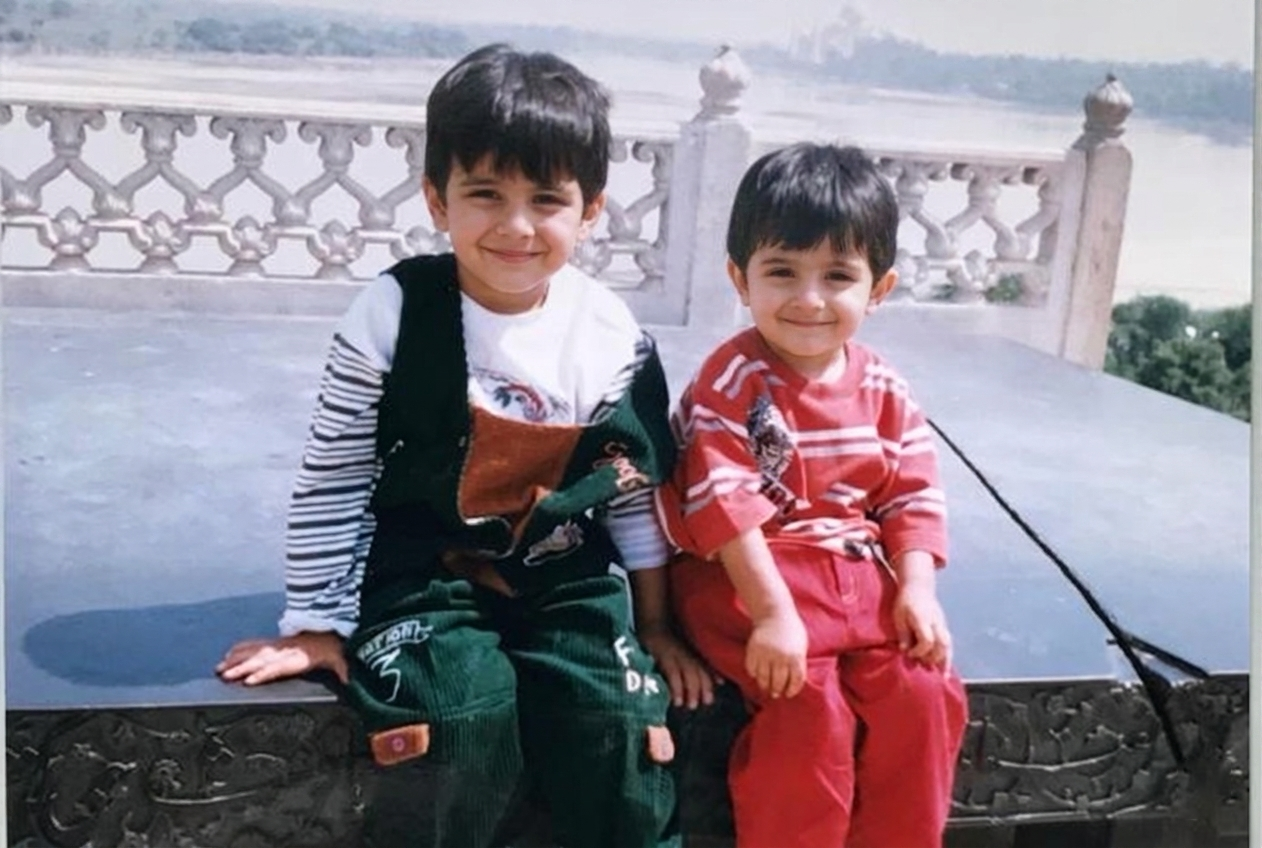
Issa & Mehfuz - Founders (& Brothers)
Onescript by Blueco Healthcare
That’s the kind of business I grew up in.
Our family built their pharmacy business over the last three decades. By the time Mehfuz and I were small, the work was woven into the rhythm of the household — dining table conversations about which partner was facing what challenge, what the team had stayed late to fix, what someone needed from us this week. The substance of the work was always present.
We grew up inside the work physically too. When our parents couldn’t pick us up from school, the people who worked with the family pharmacy did. Picked us up from the school gate, kept us in the car or in the back of the pharmacy until they were finished with their shift, then took us home. They knew us as kids. They watched us grow up. Some of them are still part of our family business today.
The same is true of the partners we’ve worked with longest. We have served Lancashire County Council, in one form or another, for nearly twenty years. The service leads who began that relationship met me when I was a child. They watched me come into the business. They know us not as a vendor and a customer but as people who have been part of each other’s working lives for decades.
When you’ve been embedded in relationships like that since childhood, it changes how you make decisions.
Decisions about taking on a partner, parting ways with a partner, keeping someone on the team in a difficult year — they aren’t transactional. They have weight. The family name is carried with the business. The reputation we hand on is the same one that was handed to us.
One of the things our family has always believed is that no partner is too big or too small to deserve the same standard of care. Whether the order was for a single patient at home or a sixteen-home council group, the rigour was the same. The relationship was the same. We didn’t size our service to commercial value.
That principle is in the bones of how Onescript works. We do choose partners selectively — not because we’re snobbish about size, but because the model we operate is specific and not every clinic is the right fit for it. But once a partner is operating with us, the standard they get is uniform. That’s the inheritance.
We have served Lancashire County Council, in one form or another, for nearly twenty years. The service leads who began that relationship met me when I was a child. They watched me come into the business.
Mehfuz and I are very different.
He came into Onescript from clinical and regulatory thinking. He read medicine and left in his final years at university. He came to Onescript with that clinical foundation and the kind of regulatory instincts that come from training inside a regulated profession — and he’s spent the years since building specialist services from the ground up. Those instincts are the spine of how the business is run internally.
I came in from a national-scale background. I led the digital and data strategy for NHS Digital’s virtual wards and remote monitoring programmes during the pandemic — work that taught me what digital healthcare looks like when it has to deliver at scale, fast, under regulatory and clinical pressure simultaneously. I came into Onescript with the conviction that what specialist B2B pharmacy needed was infrastructure that could match the scale digital partners were now operating at.
The two don’t blur into one another. They fit because they don’t.
Onescript is what happens when you take what we inherited and apply it deliberately to a new context.
What we kept: partnership over transaction. Long-view thinking over quarterly thinking. Universalism of care once we’re in. The conviction that pharmacy is about reciprocal obligation between the pharmacy, the partner, and the patients we serve together. Investment in our people. The family name carried with the business — even where the business is operating digital infrastructure for clinics nationwide.
What we changed: we engineered Onescript specifically for digital-first partners operating at scale. We made it specialist rather than generalist — focused therapy areas, purpose-built workflows, infrastructure shaped to specific kinds of care. And we structured it B2B-only, with no consumer-facing brand. The family pharmacy work has always leaned heavily B2B; we wanted Onescript to be that exclusively, and forever, so partners could trust the structural form of the business and not just our promise about it.
The values are the family business. The shape is new.
You can see the inheritance in things that don’t usually make it into a pharmacy company’s marketing material.
We invest in our people heavily. Our average phone pick-up time is under two minutes because we staff to it; we don’t outsource our patient-facing services or trim them down to maximise margin. We are not optimising for shareholder return because we are the shareholders. The investors in this business are us — and they are the people we work with, the team, the partners, the patients those partnerships serve.
We don’t cut corners that the family pharmacy wouldn’t have cut. The corner-cutting isn’t an option. The name on the door is ours.
We are still building Onescript. The work is early. The next decade is the one that will tell whether we’ve built something that genuinely deserves the trust partners place in it.
But the values aren’t going to change. The way we treat people isn’t going to change. The kind of partner we’re trying to be — long-view, partnership-led, structurally trustworthy, specialist by design — isn’t going to change.
If you’ve read this far, you probably already know whether what we’re building is for you. If it is, we’d love to hear what you’re working on.